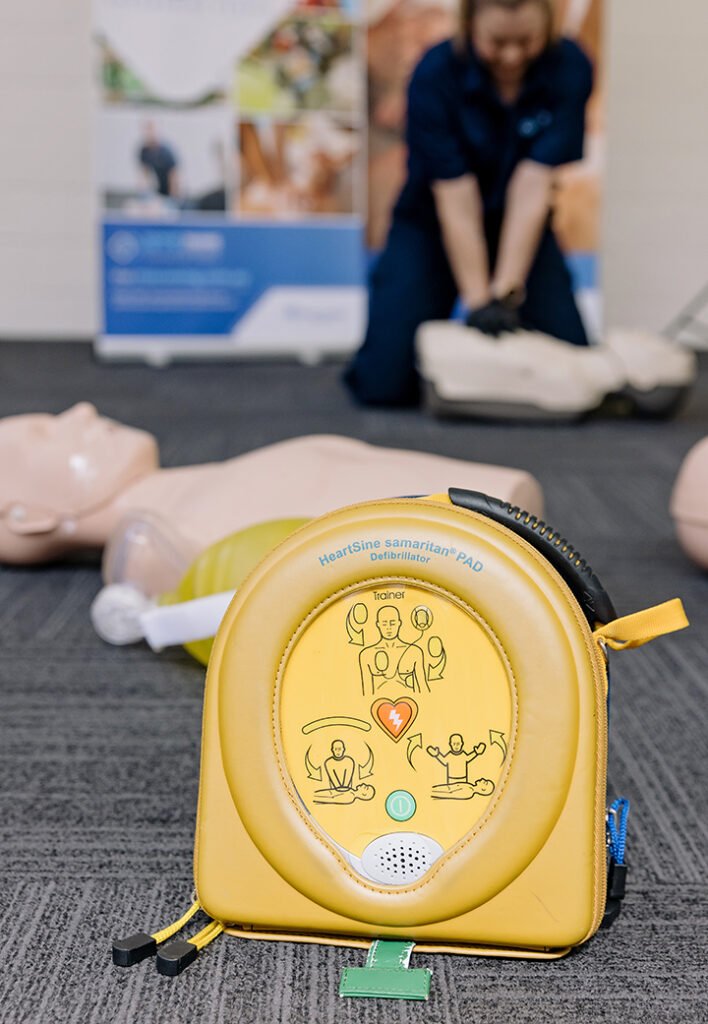
Cardiac arrest can happen anywhere – in a Perth office, on a construction site, in a warehouse, or a school. When it does, the actions taken in the first few minutes matter more than almost anything else. The chain of survival explains why, and what needs to happen fast.
What is the Chain of Survival?
The chain of survival is a five link framework developed by the Australian Resuscitation Council (ARC) that describes the sequence of actions giving a person in cardiac arrest the best chance of survival. Each link depends on the one before it. Breaking the chain or delaying any step can drop outcomes significantly!
Understanding the chain of survival is taught in CPR and first aid courses across Australia, including in RTS Training’s HLTAID009 Provide Cardiopulmonary Resuscitation course at our Osborne Park facility.
The 5 links of the Chain of Survival
- Early recognition and call for help
The chain starts the moment someone recognises that a person is unresponsive and not breathing normally, and calls 000. In Perth metro areas, St John WA ambulance response times average around 10 minutes. That gap between the call and paramedic arrival is where the actions a bystander takes can determine the outcome. Recognising cardiac arrest quickly and getting help coming is the foundation everything else is built on.
- Early CPR
Starting CPR immediately keeps oxygenated blood moving to the brain and vital organs. Without it, brain damage can begin within four to six minutes of cardiac arrest. Correct technique of 30 chest compressions followed by two rescue breaths, repeated continuously is a core practical skill in RTS Training’s HLTAID009 CPR course in Perth. Students practise on adult and infant manikins during the face to face session to build their confidence to act when needed.
- Early defibrillation
This is the link most workplaces underestimate and the one that makes the biggest difference to survival.
CPR buys time but defibrillation is what actually restores a normal heart rhythm. For every minute that passes without a shock from an AED (automated external defibrillator), survival rates fall by approximately 10%. The ARC recommends aiming for defibrillation within three to five minutes of collapse.
AEDs are designed so anyone can use them – they analyse the heart’s rhythm and only deliver a shock when needed, with step by step audio instructions. But training builds the speed and confidence to apply them without hesitation. At RTS Training, hands on AED practice is included in every HLTAID009 CPR course.
- Early Advanced Life Support
This is where St John WA paramedics take over – medications, advanced airway management, cardiac monitoring, and further intervention. Your role is to ensure they arrive to a patient who has received CPR and defibrillation without unnecessary delay, and the better the first three links, the more the paramedics have to work with.
- Post-Resuscitation Care
Once the heart restarts, hospital based care takes over including targeted temperature management and specialist cardiac treatment. Long term recovery outcomes improve significantly when the earlier links in the chain have been completed well.
Why Perth workplaces need to take the chain seriously
Most WA workplaces have a first aid kit, and many have at least one trained first aider. Far fewer have an AED on site and fewer still have staff who know where it is or feel confident using it in a real emergency.
Under WHS legislation, employers are required to have emergency procedures in place, including appropriate first aid coverage. Understanding the chain of survival is part of meeting that obligation in practice, not just on paper.
If cardiac arrest happens in your building and your team doesn’t know how to bridge that gap before St John arrives, training is the missing link.
CPR Training in Perth that covers the full chain
RTS Training’s HLTAID009 Provide Cardiopulmonary Resuscitation course is delivered at our Osborne Park training centre, Monday to Friday, with public course spots available throughout the week. You can book a space in an upcoming course through our website.
The course covers:
- DRSABCD – Danger, Response, Send for help, Airway, Breathing, CPR, Defibrillation
- Hands on CPR technique on adult and infant manikins
- Practical AED use – applied, not just explained
- Recovery position
- Infant and child CPR scenarios
Delivery is blended – self paced online theory (approximately one hour) completed before a face to face practical assessment of around one to two hours. On successful completion, participants receive a nationally recognised Statement of Attainment for HLTAID009 Provide Cardiopulmonary Resuscitation, issued by Allens Training (RTO 90909). The ARC recommends renewal every 12 months.
Frequently Asked Questions
What is the chain of survival in first aid?
The chain of survival is a five step framework from the Australian Resuscitation Council (ARC) describing the sequence of actions that give a person the best chance of surviving cardiac arrest: early recognition and calling for help, early CPR, early defibrillation, early advanced life support, and post resuscitation care. The chain of survival is covered in HLTAID009 CPR training and HLTAID011 First Aid courses.
Why is early defibrillation so important in cardiac arrest?
Survival rates from cardiac arrest fall by approximately 10% for every minute that passes without defibrillation. CPR keeps blood circulating but does not restore a normal heart rhythm — only an AED can do that. The Australian Resuscitation Council recommends aiming for defibrillation within three to five minutes of collapse for the best outcomes.
Do I need training to use an AED in Perth?
AEDs are designed to be used by any bystander – they provide step by step audio instructions and will not deliver a shock unless the heart rhythm requires it. However, CPR training that includes hands on AED practice such as the HLTAID009 course at RTS Training in Osborne Park, builds the confidence to act quickly without freezing under pressure.
How often does CPR training need to be renewed in Australia?
The Australian Resuscitation Council recommends renewing CPR certification (HLTAID009 Provide Cardiopulmonary Resuscitation) every 12 months. Many Perth workplaces and industry sites require annual renewal as a condition of site access or employment. RTS Training runs CPR refresher courses in Osborne Park throughout the week.
Does the chain of survival apply to workplace first aid in WA?
Yes. Under WHS legislation in Western Australia, employers must maintain emergency procedures including appropriate first aid response. The chain of survival framework directly informs how workplaces should plan for cardiac emergencies – knowing who the trained first aiders are, where the AED is located, and how to call for help without delay. HLTAID009 and HLTAID011 training delivered by RTS Training in Perth covers this framework in full.